stephen lake

The Stanley Cross Bottle
Innovation Under Pressure
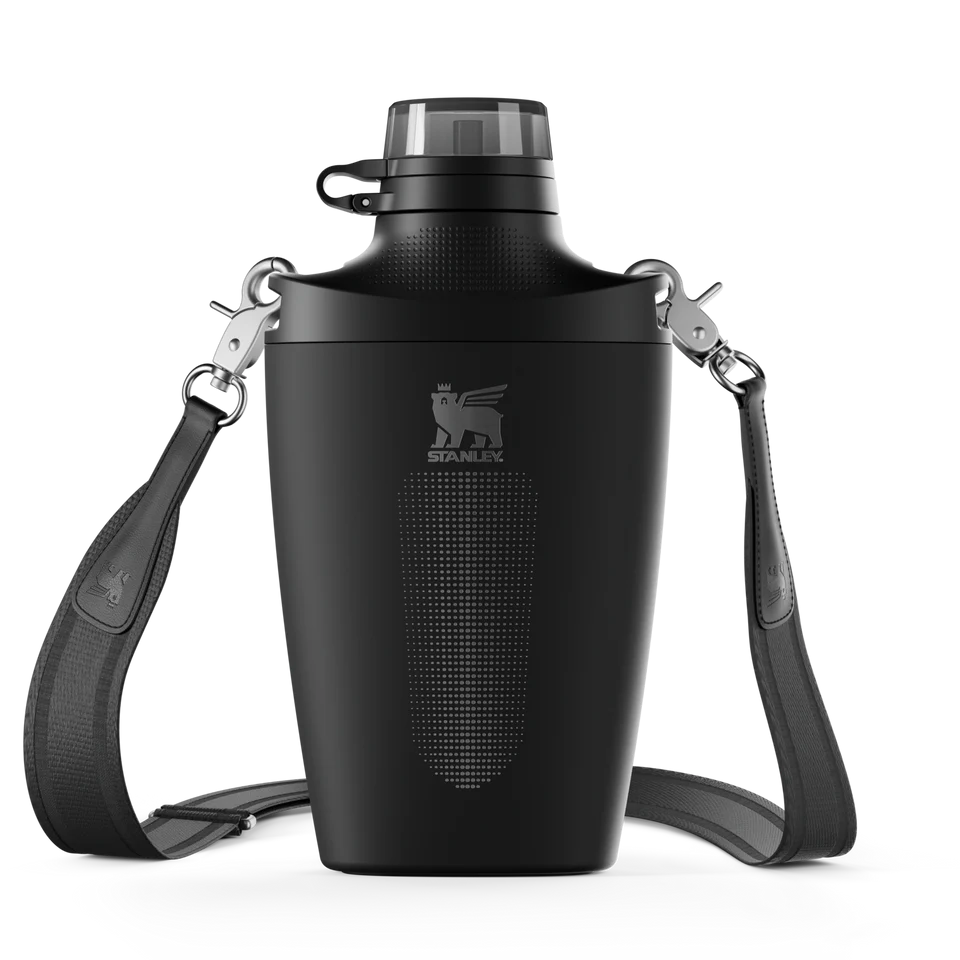
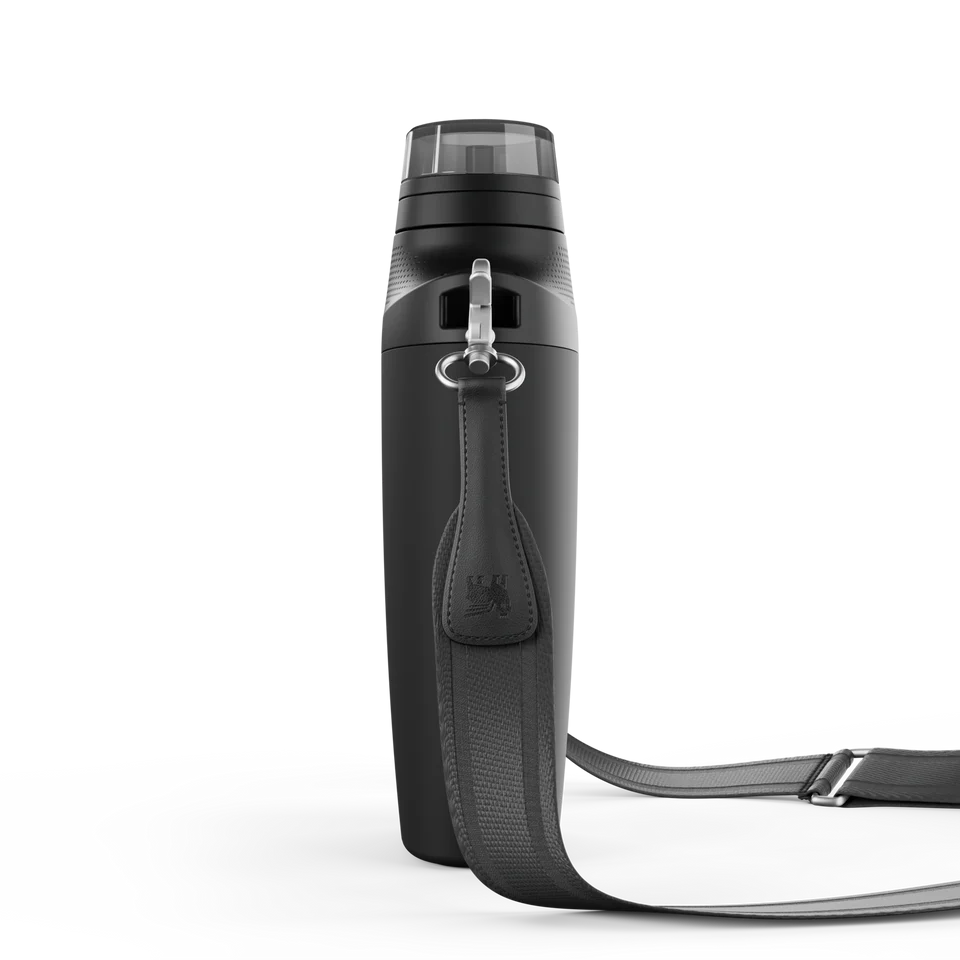
The Stanley Cross Bottle began with a disruptive brief from leadership: create a wearable, hands-free hydration solution. To be comfortable against the body, the bottle had to be flat. However, in the world of vacuum insulation, round is king.
Pressure vessels, from scuba tanks to grain silos, are cylindrical because they utilize hoop strength to resist warping under load. A flat vacuum bottle faces a massive pressure differential that threatens to implode the walls, destroying thermal performance or causing total structural failure.
With an expedited timeline and no industry precedent, the task was to bridge the gap between an "awkward" round bottle and a high-performance flat one.
Building Foundational Knowledge
As the lead engineer, I faced a dilemma: I could make the bottle strong by making the steel thick, but that would result in a heavy, expensive, and unsustainable product. The goal was to find the absolute minimum thickness required to maintain structural integrity and product quality.
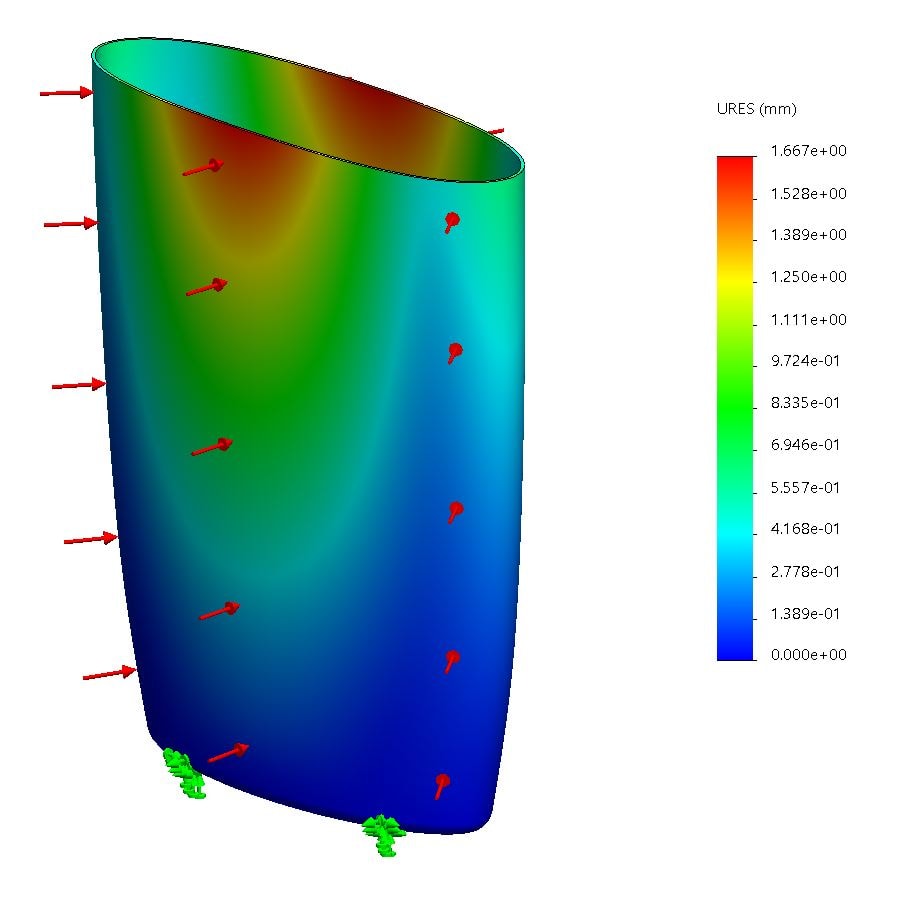
The Process: I conducted a comprehensive feasibility analysis using Finite Element Analysis (FEA) simulation tools. Working alongside the design team, I ran countless simulations on dozens of form variations. Each iteration was a delicate dance between aesthetic intent and structural necessity.
Partnering for Success
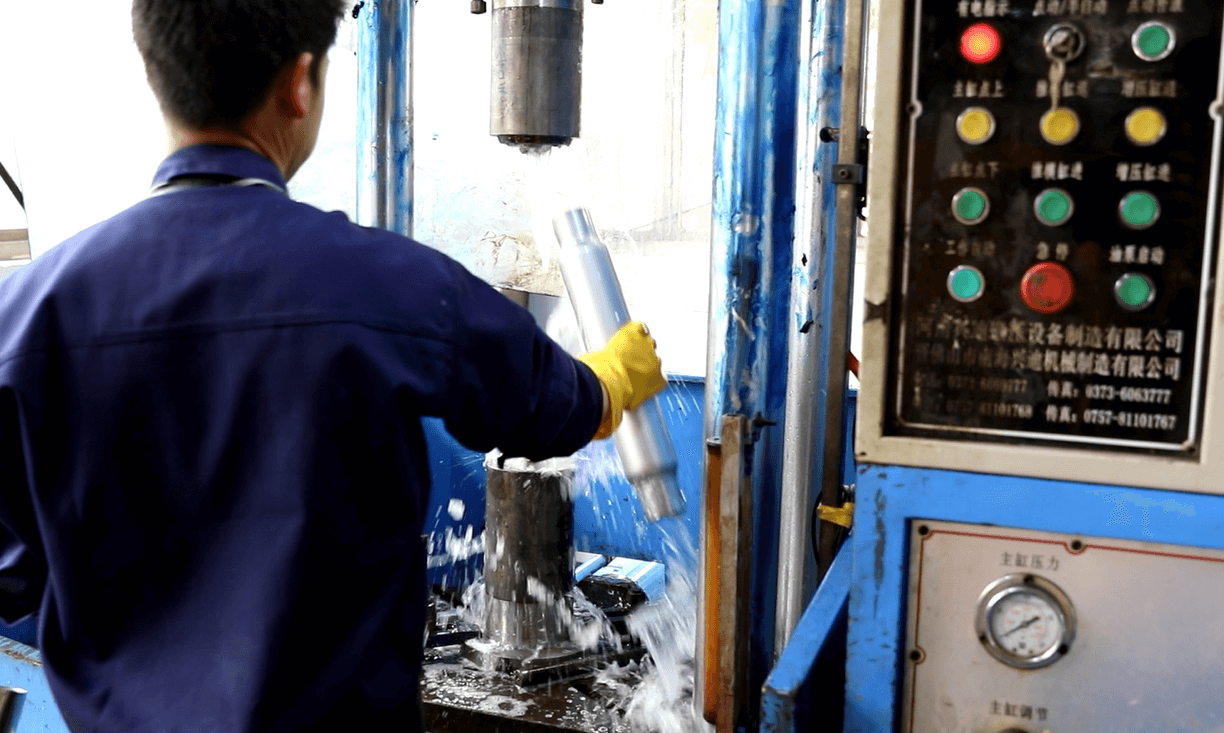
Simultaneously, I coordinated with factory partners to invent new production techniques. Since the industry is optimized for round forms, this required entirely new machinery, tooling designs, and assembly processes.
The project was fast-tracked with zero margin for "test tooling" or production-realistic prototyping. My engineering analysis was the prototype. Whatever I recommended would go straight into mass production, and production had to be rethought from step one.
But the technical challenge is only ever half the battle.
Even though we were attempting to create something that hadn’t been made before, I was confident in our solution. But like most projects, seeing a solution through production required extraordinary project diplomacy.
The design team was more accustomed to having final say on form. But in this case, the form was the engineering problem. To make sure the design team stayed happy, I provided fast turn around simulations on all exploratory forms. This made the project far more collaborative and allowed us to reach a form everyone could be happy with.
Our manufacturing partner pushed for ‘safer’ alterations to the geometry. Alterations that on a typical project would have been perfectly reasonable. To mitigate this I generated additional engineering analysis to find alignment in the best solution.
And lastly, key stakeholders needed additional assurances to be confident in a first-of-its-kind solution while navigating the multi-month development cycle. I knew a complex engineering analysis wouldn’t suffice, so I created clear and concise risk assessments for critical decisions with accompanying mitigation plans.
The Result:
An Industry First
When the first production samples arrived, the relief was immediate. The design held. The thermal performance was intact.
We delivered an industry-first product that redefined what is possible in a saturated category. By combining rigorous FEA simulation with cross-functional leadership, I helped Stanley bring a complex innovation to market on time and on budget.
stephen lake
The Stanley Cross Bottle
Innovation Under Pressure
The Stanley Cross Bottle began with a disruptive brief from leadership: create a wearable, hands-free hydration solution. To be comfortable against the body, the bottle had to be flat. However, in the world of vacuum insulation, round is king.
Pressure vessels, from scuba tanks to grain silos, are cylindrical because they utilize hoop strength to resist warping under load. A flat vacuum bottle faces a massive pressure differential that threatens to implode the walls, destroying thermal performance or causing total structural failure.
With an expedited timeline and no industry precedent, the task was to bridge the gap between an "awkward" round bottle and a high-performance flat one.
Building Foundational Knowledge
As the lead engineer, I faced a dilemma: I could make the bottle strong by making the steel thick, but that would result in a heavy, expensive, and unsustainable product. The goal was to find the absolute minimum thickness required to maintain structural integrity and product quality.
The Process: I conducted a comprehensive feasibility analysis using Finite Element Analysis (FEA) simulation tools. Working alongside the design team, I ran countless simulations on dozens of form variations. Each iteration was a delicate dance between aesthetic intent and structural necessity.
Partnering for Success
Simultaneously, I coordinated with factory partners to invent new production techniques. Since the industry is optimized for round forms, this required entirely new machinery, tooling designs, and assembly processes.
The project was fast-tracked with zero margin for "test tooling" or production-realistic prototyping. My engineering analysis was the prototype. Whatever I recommended would go straight into mass production, and production had to be rethought from step one.
But the technical challenge is only ever half the battle.
Even though we were attempting to create something that hadn’t been made before, I was confident in our solution. But like most projects, seeing a solution through production required extraordinary project diplomacy.
The design team was more accustomed to having final say on form. But in this case, the form was the engineering problem. To make sure the design team stayed happy, I provided fast turn around simulations on all exploratory forms. This made the project far more collaborative and allowed us to reach a form everyone could be happy with.
Our manufacturing partner pushed for ‘safer’ alterations to the geometry. Alterations that on a typical project would have been perfectly reasonable. To mitigate this I generated additional engineering analysis to find alignment in the best solution.
And lastly, key stakeholders needed additional assurances to be confident in a first-of-its-kind solution while navigating the multi-month development cycle. I knew a complex engineering analysis wouldn’t suffice, so I created clear and concise risk assessments for critical decisions with accompanying mitigation plans.
The Result:
An Industry First
When the first production samples arrived, the relief was immediate. The design held. The thermal performance was intact.
We delivered an industry-first product that redefined what is possible in a saturated category. By combining rigorous FEA simulation with cross-functional leadership, I helped Stanley bring a complex innovation to market on time and on budget.
stephen lake
The Stanley Cross Bottle
Innovation Under Pressure
The Stanley Cross Bottle began with a disruptive brief from leadership: create a wearable, hands-free hydration solution. To be comfortable against the body, the bottle had to be flat. However, in the world of vacuum insulation, round is king.
Pressure vessels, from scuba tanks to grain silos, are cylindrical because they utilize hoop strength to resist warping under load. A flat vacuum bottle faces a massive pressure differential that threatens to implode the walls, destroying thermal performance or causing total structural failure.
With an expedited timeline and no industry precedent, the task was to bridge the gap between an "awkward" round bottle and a high-performance flat one.
Building Foundational Knowledge
As the lead engineer, I faced a dilemma: I could make the bottle strong by making the steel thick, but that would result in a heavy, expensive, and unsustainable product. The goal was to find the absolute minimum thickness required to maintain structural integrity and product quality.
The Process: I conducted a comprehensive feasibility analysis using Finite Element Analysis (FEA) simulation tools. Working alongside the design team, I ran countless simulations on dozens of form variations. Each iteration was a delicate dance between aesthetic intent and structural necessity.
Partnering for Success
Simultaneously, I coordinated with factory partners to invent new production techniques. Since the industry is optimized for round forms, this required entirely new machinery, tooling designs, and assembly processes.
The project was fast-tracked with zero margin for "test tooling" or production-realistic prototyping. My engineering analysis was the prototype. Whatever I recommended would go straight into mass production, and production had to be rethought from step one.
But the technical challenge is only ever half the battle.
Even though we were attempting to create something that hadn’t been made before, I was confident in our solution. But like most projects, seeing a solution through production required extraordinary project diplomacy.
The design team was more accustomed to having final say on form. But in this case, the form was the engineering problem. To make sure the design team stayed happy, I provided fast turn around simulations on all exploratory forms. This made the project far more collaborative and allowed us to reach a form everyone could be happy with.
Our manufacturing partner pushed for ‘safer’ alterations to the geometry. Alterations that on a typical project would have been perfectly reasonable. To mitigate this I generated additional engineering analysis to find alignment in the best solution.
And lastly, key stakeholders needed additional assurances to be confident in a first-of-its-kind solution while navigating the multi-month development cycle. I knew a complex engineering analysis wouldn’t suffice, so I created clear and concise risk assessments for critical decisions with accompanying mitigation plans.
The Result:
An Industry First
When the first production samples arrived, the relief was immediate. The design held. The thermal performance was intact.
We delivered an industry-first product that redefined what is possible in a saturated category. By combining rigorous FEA simulation with cross-functional leadership, I helped Stanley bring a complex innovation to market on time and on budget.